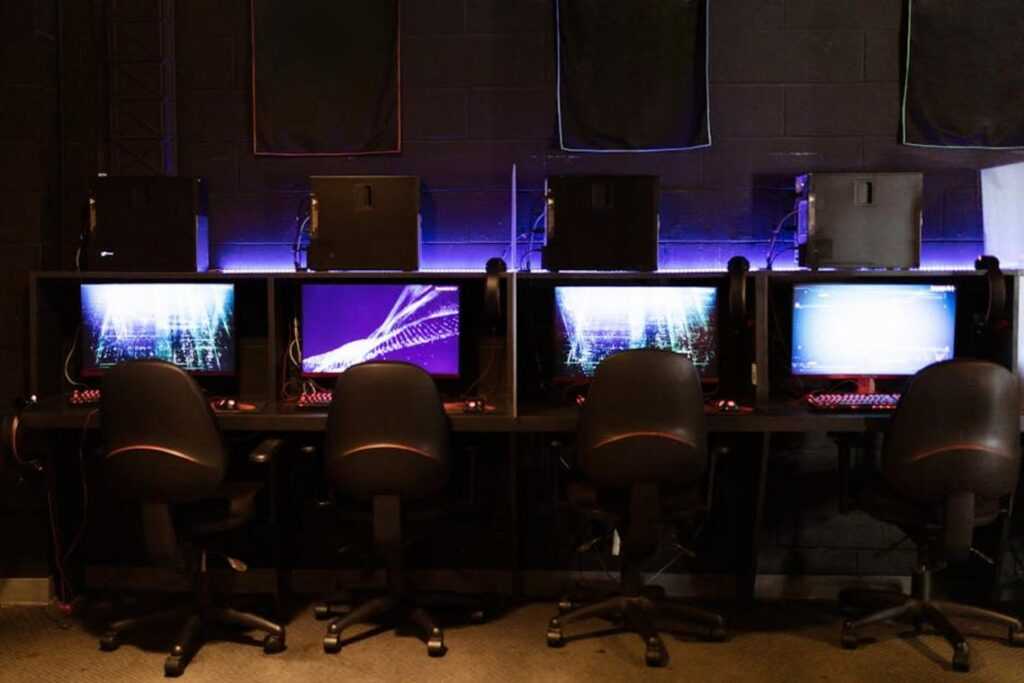

High-end gaming used to come in a box—along with a $2000 price tag and a constant need to upgrade. Not anymore.
You’re here because you’ve heard the hype around cloud gaming and want a straight answer: Is it finally good enough to replace a traditional rig? And what’s really driving its sudden rise? This guide breaks down the advanced infrastructure behind it—from server-side GPUs to latency optimization—and explains the real story behind cloud gaming growth.
The promise is simple: play AAA titles on almost any device without owning expensive hardware. But does it actually deliver?
Drawing on years of hands-on network optimization and gameplay performance analysis, we cut through the marketing noise to show you what works, what doesn’t, and how to get the best possible experience right now.
The Expanding Market: A Strategic Look at the Major Players
Cloud gaming isn’t just Netflix-for-games. It’s a battle of business models, infrastructure, and ecosystem lock-in (yes, lock-in is a feature, not a bug).
The “Bring Your Own Game” Model (NVIDIA GeForce Now)
This model lets you stream titles you already own on Steam or Epic Games. In simple terms, you’re renting a high-powered remote PC. The upside? No repurchasing games. If you’ve spent years building a library, this is the most cost-efficient route.
The downside? Not every game is supported due to publisher opt-ins. Some argue this limits freedom. Fair point. But compared to rebuying titles inside closed ecosystems, ownership flexibility is a strategic edge competitors rarely match.
Pro tip: Prioritize services offering RTX-enabled tiers if you care about ray tracing (real-time light simulation that dramatically improves visuals).
The “All-You-Can-Eat” Subscription (Xbox Cloud Gaming & Amazon Luna)
Here, you pay for access to a rotating catalog. Think Spotify, but for games. It’s ideal for discovery and pairs well with trends like why indie games are dominating digital storefronts: https://uggworldtech.com.co/why-indie-games-are-dominating-digital-storefronts/
Critics say rotating libraries mean games disappear. True. But for players who value experimentation over ownership, it’s unmatched value.
Performance Tiers and Cost Breakdown
Most services offer:
- 1080p/60fps (standard tier)
- 1440p upgrades
- 4K/120fps with ray tracing (premium tier)
The difference isn’t just resolution. It’s latency, bitrate, and hardware priority. Competitive players feel that gap immediately (especially in shooters).
Ecosystem Integration
Xbox Cloud Gaming’s integration with Game Pass Ultimate allows seamless transitions between console, PC, and mobile. That continuity is a unique competitive advantage driving cloud gaming growth.
Others stream games. Microsoft extends an ecosystem. And in 2026, ecosystems win.
Cloud gaming has moved from bold promise to unstoppable momentum.
We’ve explored the sophisticated tech and market dynamics proving that cloud gaming growth is no longer a niche experiment but a dominant force. What once required a high-end rig and constant upgrades is now powered by remote servers delivering high-fidelity performance straight to your screen.
The biggest pain point for gamers—expensive hardware—is officially being dismantled. No more chasing GPUs. No more costly upgrades just to keep up.
With a fast internet connection and access to powerful remote infrastructure, anyone can step into immersive, AAA-quality gameplay instantly.
You came here to see whether the future of gaming is truly streamed. Now you know it is—and you know how to optimize your setup.
Step Into the Future of Play
Don’t let outdated hardware hold you back. Try a free trial from a leading cloud gaming service today and experience elite performance without the price tag. The future is streamed—log in and start playing now.
 Gaming Rig Optimization & Tech Innovation Specialist
There is a specific skill involved in explaining something clearly — one that is completely separate from actually knowing the subject. Joana Dillardoniel has both. They has spent years working with tech-powered gaming innovations in a hands-on capacity, and an equal amount of time figuring out how to translate that experience into writing that people with different backgrounds can actually absorb and use.
Joana tends to approach complex subjects — Tech-Powered Gaming Innovations, Expert Tutorials, World-Class eSports Frameworks being good examples — by starting with what the reader already knows, then building outward from there rather than dropping them in the deep end. It sounds like a small thing. In practice it makes a significant difference in whether someone finishes the article or abandons it halfway through. They is also good at knowing when to stop — a surprisingly underrated skill. Some writers bury useful information under so many caveats and qualifications that the point disappears. Joana knows where the point is and gets there without too many detours.
The practical effect of all this is that people who read Joana's work tend to come away actually capable of doing something with it. Not just vaguely informed — actually capable. For a writer working in tech-powered gaming innovations, that is probably the best possible outcome, and it's the standard Joana holds they's own work to.
Gaming Rig Optimization & Tech Innovation Specialist
There is a specific skill involved in explaining something clearly — one that is completely separate from actually knowing the subject. Joana Dillardoniel has both. They has spent years working with tech-powered gaming innovations in a hands-on capacity, and an equal amount of time figuring out how to translate that experience into writing that people with different backgrounds can actually absorb and use.
Joana tends to approach complex subjects — Tech-Powered Gaming Innovations, Expert Tutorials, World-Class eSports Frameworks being good examples — by starting with what the reader already knows, then building outward from there rather than dropping them in the deep end. It sounds like a small thing. In practice it makes a significant difference in whether someone finishes the article or abandons it halfway through. They is also good at knowing when to stop — a surprisingly underrated skill. Some writers bury useful information under so many caveats and qualifications that the point disappears. Joana knows where the point is and gets there without too many detours.
The practical effect of all this is that people who read Joana's work tend to come away actually capable of doing something with it. Not just vaguely informed — actually capable. For a writer working in tech-powered gaming innovations, that is probably the best possible outcome, and it's the standard Joana holds they's own work to.