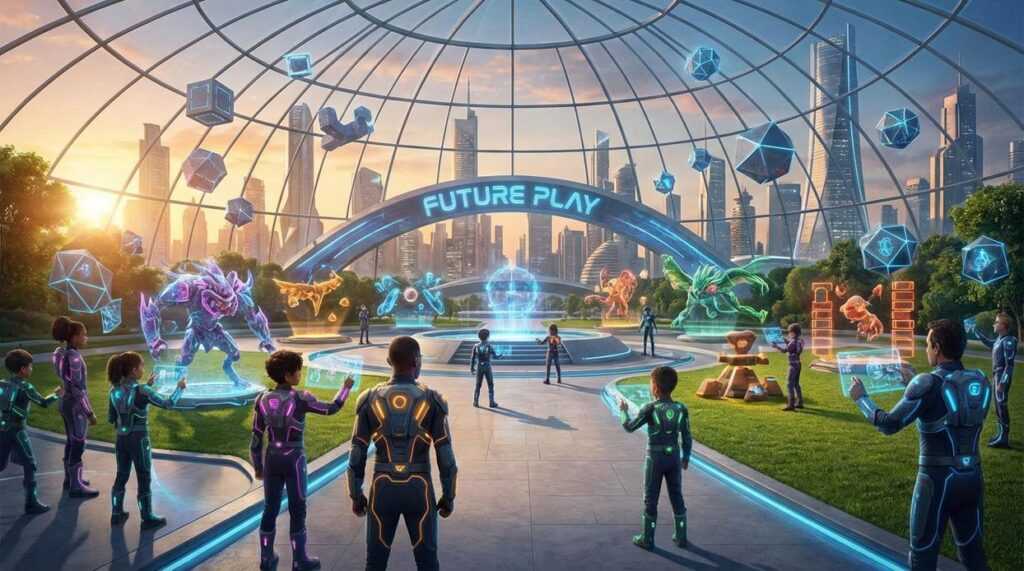

The gaming world is evolving faster than ever, and if you’re searching for insights into gaming industry trends 2026, you’re likely looking for clear, actionable intelligence—not recycled predictions. From AI-powered gameplay mechanics and competitive eSports expansion to next-gen hardware breakthroughs and immersive cross-platform ecosystems, the landscape is shifting in ways that directly impact how you play, compete, and build your setup.
This article breaks down the most important developments shaping 2026, highlighting what matters for competitive players, casual gamers, content creators, and tech enthusiasts alike. We analyze emerging technologies, tournament frameworks, monetization models, and performance optimization strategies to give you a complete picture of where the industry is heading.
Our insights are grounded in hands-on testing, technical performance benchmarking, and in-depth analysis of market data and competitive gaming ecosystems—so you’re not just reading speculation, but informed perspectives designed to help you stay ahead of the curve.
Gaming in 2026 feels different because I have seen this cycle before. In 2016, I chased every VR headline, convinced it would replace consoles overnight. It did not. That lesson shapes how I read gaming industry trends 2026 today.
The real shifts are INFRASTRUCTURE, ECONOMICS, and COMPETITIVE ECOSYSTEMS. Cloud latency is finally playable, subscription bundles are squeezing publishers, and creator-led tournaments rival leagues.
Some argue AI tools will dilute skill. I disagree. Like aim trainers, they raise the floor, not the ceiling.
Watch for:
- Persistent cross-platform identities
- Player-owned economies
The hype fades; foundations remain (remember Pokémon Go?). REAL change endures.
The AI Co-Pilot: How Artificial Intelligence Will Redefine Gameplay
Have you ever wondered why enemy encounters start to feel predictable after a few hours? That’s because most traditional AI is scripted—pre-programmed behaviors triggered by specific conditions. In contrast, generative AI (systems that create new content in real time rather than following fixed scripts) is changing the rules entirely. Instead of repeating dialogue trees, NPCs can craft dynamic storylines, generate unique quests, and adapt combat tactics on the fly. Imagine a rival faction that remembers your last ambush and counters it next time. Sound intimidating? Good.
At the same time, AI-driven personalization is turning games into skill coaches. By analyzing your reaction times, accuracy, and decision-making patterns, AI can build custom drills that target your weak spots. Struggling with resource management? Expect micro-scenarios designed just for you. Think of it as having a sparring partner who studies your gameplay footage frame by frame (Rocky montage optional).
Meanwhile, procedural generation at scale empowers smaller studios to build massive, varied worlds without ballooning budgets. This shift—highlighted across gaming industry trends 2026—means indie titles can rival AAA scope. And if you’re curious how this evolution connects to broader tech shifts, explore this deep dive: AI co-pilot overview.
So here’s the real question: if enemies adapt, tutorials evolve, and worlds expand infinitely, can you still rely on memorized patterns? Or will creativity become your ultimate meta?
From microtransactions to player-owned economies, the industry is clearly shifting—though not without friction. The post-loot box era signals a pivot away from random-chance monetization, a system regulators have compared to gambling (UK Parliament, 2020). Instead, publishers are testing direct purchase models, verifiable digital ownership, and player-to-player trading. Critics argue this simply rebrands monetization, not reforming it. That concern is fair. But when ownership is transparent and transferable, players gain tangible value, not just probability.
The next leap is UGC platforms. Games increasingly function as ecosystems where players build, monetize, and trade assets. Think Roblox or Fortnite’s creator economy—but deeper, with built-in revenue sharing and analytics. Still, it’s unclear how sustainable revenue splits will be long-term.
Practical Web3 integration may hinge on:
- Cross-game asset compatibility
- Transparent, secure marketplaces
- Verifiable scarcity without pay-to-win creep
Hype aside, blockchain must solve user experience first. Wallet friction still deters mainstream players.
This evolution adds a strategic asset management layer. Progression may depend as much on portfolio decisions as mechanical skill (a fantasy draft, but with skins). Some gamers resist, fearing financialization will overshadow fun. That risk is real. Yet gaming industry trends 2026 suggest communities want portability and control, especially as how cross platform gaming is changing player communities. Whether this becomes empowerment or overcomplexity remains uncertain. The balance will define the next generation of play and digital economies.
The End of the Hardware Arms Race? Cloud, Hybrid, and Niche Rigs

Cloud, Hybrid, and What Comes Next
For years, high-end gaming meant chasing the newest GPU like it was the Infinity Stones. But by 2026, cloud gaming—where remote servers render a game and stream it to your device—won’t be experimental anymore. Services like NVIDIA GeForce NOW and Xbox Cloud Gaming have already proven viability, with Microsoft reporting millions of active cloud users (Microsoft, 2024). In my view, this is the real democratizer: AAA titles on a tablet, smart TV, or low-spec laptop.
That said, critics argue latency (the delay between input and on-screen action) still ruins competitive play. Fair. Yet hybrid models are the compromise. Consoles and PCs will offload non-critical tasks—like procedural environment generation—to the cloud, while core gameplay renders locally. The result? Lower hardware strain, smoother frames, best-of-both-worlds performance.
Meanwhile, optimization beats raw power. Instead of obsessing over teraflops, players will tune for input lag, network stability, and streaming bitrate. Pro tip: prioritize wired Ethernet over Wi-Fi for consistent latency (yes, cables still win).
And then there’s mixed reality. Lightweight AR/VR headsets are finally approaching mass adoption, with IDC projecting steady double-digit growth in XR shipments through 2026 (IDC, 2023). If gaming industry trends 2026 prove anything, it’s this: smarter systems—not just stronger ones—will define the next era.
eSports 2.0: The Creator-Led Competitive Scene
The era of massive, developer-controlled leagues is starting to loosen its grip. Instead, creator-hosted tournaments and community-run ladders are gaining traction. Why? Players want flexibility, faster formats, and personalities they relate to. Think less “corporate arena” and more “Twitch Rivals energy.” Decentralization simply means power shifting from one central authority to many independent organizers. As gaming industry trends 2026 continue evolving, this model lowers entry barriers and gives rising competitors more chances to be seen.
New Metrics for Success
However, prize pools alone won’t define success anymore. Engagement rates, stream consistency, and personal branding now matter just as much. A semi-pro with strong community support can outpace a higher-ranked but invisible player. (Yes, charisma counts.) Focus on building content alongside scrims.
Meanwhile, AI-powered coaching tools are leveling the field. Advanced match analysis—heatmaps, decision trees, reaction-time breakdowns—offers pro-level insights to amateurs. Pro tip: review AI feedback within 24 hours of matches for maximum retention.
You’re stepping into a radically different arena. Recent data from Newzoo projects the global games market to surpass $220 billion by 2026, while over 60% of studios report integrating AI-driven development tools (GDC State of the Industry). In other words, the shift is measurable, not hype.
However, adapting is the real boss battle. Dynamic economies, cloud-streamed hardware, and player-shaped worlds demand constant upskilling. That’s why mastering gaming industry trends 2026 isn’t optional—it’s survival.
So start now. Test AI companions, experiment with hybrid cloud setups, refine your strategy loops. The players who iterate fastest will dominate leaderboards tomorrow and win consistently.
Stay Ahead with gaming industry trends 2026
You came here to understand where the gaming world is heading—and now you have a clear view of the forces shaping the future. From competitive eSports evolution to AI-driven gameplay systems and next-gen hardware optimization, you’re no longer guessing about what’s next.
The reality is simple: the gaming space moves fast. If you’re not adapting to gaming industry trends 2026, you risk falling behind competitors who are already upgrading their rigs, refining their strategies, and leveraging smarter tech frameworks. Staying current isn’t optional—it’s the difference between dominating and disconnecting.
Now it’s your move. Start implementing these strategies, optimize your setup, and align your gameplay with where the industry is heading—not where it’s been.
Ready to gain the competitive edge? Tap into proven tutorials, advanced optimization hacks, and elite-level strategies trusted by serious gamers. Upgrade your performance today and position yourself at the forefront of gaming industry trends 2026 before everyone else catches up.
 Gaming Rig Optimization & Tech Innovation Specialist
There is a specific skill involved in explaining something clearly — one that is completely separate from actually knowing the subject. Joana Dillardoniel has both. They has spent years working with tech-powered gaming innovations in a hands-on capacity, and an equal amount of time figuring out how to translate that experience into writing that people with different backgrounds can actually absorb and use.
Joana tends to approach complex subjects — Tech-Powered Gaming Innovations, Expert Tutorials, World-Class eSports Frameworks being good examples — by starting with what the reader already knows, then building outward from there rather than dropping them in the deep end. It sounds like a small thing. In practice it makes a significant difference in whether someone finishes the article or abandons it halfway through. They is also good at knowing when to stop — a surprisingly underrated skill. Some writers bury useful information under so many caveats and qualifications that the point disappears. Joana knows where the point is and gets there without too many detours.
The practical effect of all this is that people who read Joana's work tend to come away actually capable of doing something with it. Not just vaguely informed — actually capable. For a writer working in tech-powered gaming innovations, that is probably the best possible outcome, and it's the standard Joana holds they's own work to.
Gaming Rig Optimization & Tech Innovation Specialist
There is a specific skill involved in explaining something clearly — one that is completely separate from actually knowing the subject. Joana Dillardoniel has both. They has spent years working with tech-powered gaming innovations in a hands-on capacity, and an equal amount of time figuring out how to translate that experience into writing that people with different backgrounds can actually absorb and use.
Joana tends to approach complex subjects — Tech-Powered Gaming Innovations, Expert Tutorials, World-Class eSports Frameworks being good examples — by starting with what the reader already knows, then building outward from there rather than dropping them in the deep end. It sounds like a small thing. In practice it makes a significant difference in whether someone finishes the article or abandons it halfway through. They is also good at knowing when to stop — a surprisingly underrated skill. Some writers bury useful information under so many caveats and qualifications that the point disappears. Joana knows where the point is and gets there without too many detours.
The practical effect of all this is that people who read Joana's work tend to come away actually capable of doing something with it. Not just vaguely informed — actually capable. For a writer working in tech-powered gaming innovations, that is probably the best possible outcome, and it's the standard Joana holds they's own work to.